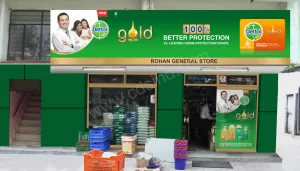
Shoppers enter stores with brand exposure from TV, social, and search — but the final decision often happens in front of the shelf. The traditional “last mile” of marketing is physical and immediate: high-impact visuals, product trials, demo stations, and placement all influence decisions right at the point of purchase.
Problem many brands face:
- Strong awareness but weak conversion in retail.
- Launches that don’t get noticed on crowded shelves.
- Low trial rates for new SKUs.
- Limited control over how product is presented and merchandised in-store.
In-store branding is the strategic and creative solution that turns in-shop attention into measurable sales uplift, higher basket value, and stronger brand recall — if executed with planning, measurement and local insight.
What is In-Store Branding?
In-store branding includes all visual, sensory, and experiential assets placed inside a retail environment to promote a brand, product or service. It’s the physical layer of your marketing funnel where attention and purchase intent meet.
Core components
- Static visual assets: wall posters, danglers, shelf talkers, wobblers, floor graphics, gondola-end displays, standees, roll-ups.
- Digital displays: LED screens, LCD posters, digital shelf labels, interactive kiosks.
- Tactile & sampling elements: product samples, trial counters, testers, demo units.
- Environmental & sensory branding: scent marketing, soundtracks, lighting, branded fixtures.
- Service & staff elements: branded staff uniforms, demo specialists, training scripts.
- Support materials: POS leaflets, coupons, QR-enabled tags, loyalty prompts.
Purpose & marketing role
In-store branding plays roles across the funnel:
- Awareness → Consideration: grabs attention as customers enter or navigate aisles.
- Consideration → Conversion: educates, demonstrates value, and reduces friction at the purchase moment.
- Conversion → Loyalty: creates memorable brand moments (sampling + positive experience) that encourage repeat purchase and advocacy.
It also:
- Shortens decision time by highlighting benefits and offers.
- Increases average order value (AOV) through cross-sell and bundling cues.
- Strengthens local relevance with language or regional creative.
Key Features
1. Cost efficiency & longevity
Printed and reusable displays provide repeated impressions without recurring media buys. A high-quality POS unit can interact with thousands of shoppers over weeks or months.
2. Customizability
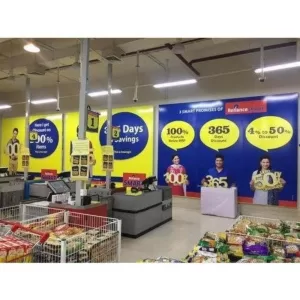
Campaigns can be tailored by store type, geography, season, and SKU mix. This allows a single national brief to be customized for local stores and audiences.
3. Local targeting & cultural fit
Language, imagery and offers can be adapted per region (Telugu for AP/TS, specific festivals) to resonate deeply.
4. Tangibility & sensory engagement
Physical trials and touchable products create trust and accelerate adoption for categories that need sampling (FMCG, beverages, cosmetics).
5. Integration potential
In-store assets connect to digital through QR codes, short URLs, or loyalty integrations — letting offline influence online metrics.
Benefits for businesses
Business outcomes
- Increased conversion at the shelf / category.
- Higher sell-through of new SKUs and promotions.
- Larger average basket size through cross-sell prompts.
- Faster adoption during launch windows.
- Stronger recall & brand equity among local shoppers.
KPIs to track
- Units sold (by SKU) — pre vs post-campaign.
- Sell-through rate (inventory sold ÷ stock available).
- Incremental sales uplift vs control stores.
- Average transaction value (AOV).
- Redemption rates (coupons, trial offers).
- QR scans / landing page visits (digital tie-ins).
- Footfall to demo counter / dwell time.
- Brand recall & consideration via short intercept surveys.
Measurement methods
- Control vs test stores — run in selected stores and compare with matched unbranded stores.
- Pre/post baseline — measure two weeks baseline before rollout and then measure during and after.
- Coupon/UTM tracking — use unique codes on POS for attribution.
- Shelf audits & mystery-shop — confirm correct execution and stock levels.
- Customer intercepts or short SMS surveys — collect qualitative signals and NPS.
Industries & use-case playbooks
FMCG (snacks, beverages, staples)
- Tactics: gondola-ends, fridge branding, sampling carts, bundle promotions.
- Why: impulse-driven purchases; sampling reduces trial barriers.
Consumer electronics
- Tactics: interactive demo stations, comparison charts, video walls, trained demo staff.
- Why: buyers need to experience functionality and trust.
Fashion & apparel
- Tactics: window mannequins, outfit displays, thematic dressing rooms, POS cross-sell.
- Why: visual styling influences purchase.
Pharma & healthcare
- Tactics: product benefit posters, pharmacist brief sheets, trial packs (where allowed), educational leaflets.
- Why: customers seek information and reassurance.
Quick-service restaurants & cafés
- Tactics: table toppers, menu-board highlights, in-restaurant sampling for new items.
- Why: immediate consumption decisions.
B2B showrooms (furniture, machinery)
- Tactics: product theatre demos, brochure stands, signage with technical specs and case studies.
- Why: purchase cycles are longer and need proof points.
Where & when is it most effective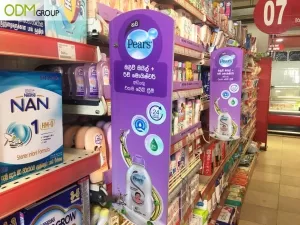
Optimal placements (heatmap logic)
- Entry zone: first impressions, hero creatives.
- Aisle intersections & crossroads: natural pause points.
- Gondola ends / feature shelves: high visibility for promotions.
- Near related categories: cross-sell opportunities.
- Checkout / queue: last-minute impulse prompts.
- Demo/sampling counter: dedicated trial areas.
Timing & seasonality
- Product launches: start day-of + sustained 2–6 weeks.
- Festive seasons & local events: target with culturally relevant creative.
- Promotional weeks & price drops: amplify with larger fixtures and digital screens.
- Slow periods: use sampling & experiential tactics to drive traffic.
Customization & creative options
Creative concepts
- Seasonal themes: festival packaging + decorations.
- Limited-edition in-store only SKUs: drive urgency.
- Co-branding with retailers: exclusives with prominent store logos.
- Interactive QR experiences: short video + instant coupon.
- Gamified sampling: spin-to-win at demo counters.
Material & technical specs (common, practical)
- Printed posters: A1 / A2 / 2ft×3ft / 2ft×6ft standees.
- Banners & vinyl: 440–520gsm PVC vinyl for durability.
- Foamboard / Coroplast: lighter, inexpensive for short-term displays.
- LED screens: ensure sufficient brightness for store environment; content loop of 15–30 seconds.
- Standees & gondola headers: modular units for re-use.
Design principles, messaging & creative brief template
Design principles
- Visual hierarchy: headline → 1 benefit → CTA.
- Readability: headline readable from 3–5 meters for in-store posters.
- Contrast & color: ensure logo and CTA stand out.
- Single idea per touchpoint: avoid clutter.
- Local language + English: use local language for emotional hook, English for technical details if needed.
- Brand consistency: follow brand guidelines for typography and color.
Implementation
10-step execution plan
- Discovery & brief — objectives, stores, SKU list.
- Store audit — photos, shelving, footfall, store dimensions.
- Concept design — 2–3 creative directions.
- Mockups & approvals — artwork sign-off with retailer and legal.
- Production & QA — print checks, proofing.
- Logistics planning — pickup, delivery windows, installation teams.
- Installation — coordinate with store managers and installation crew.
- Launch & sampling — staff training, scripts, uniforms.
- Monitoring — daily/weekly checks, shelf audits.
- Post-campaign measurement — sales analysis, learnings.
Why choose Raagnaai Ads for in-store branding?
- 15 years regional experience in Andhra Pradesh & Telangana.
- End-to-end delivery: audits, design, production, logistics, installs, monitoring, and measurement.
- Local insights: messaging and timing optimized for festivals and regional customer behavior.
- On-ground teams: trained installation crews and sampling staff.
- Performance focus: measurable campaigns with control-tests and reporting.
Our promise: clean installs, measurable uplift, and creative that sells.
Getting Started with In-Store Branding
In-store branding is the bridge between awareness and purchase — and when planned and executed well, it becomes one of the most cost-effective ways to convert attention into revenue. For marketing managers, business owners and brand heads, the playbook is clear: audit, pilot, measure, optimize, and scale. Localized creative, control-store measurement, and strong logistics are the three pillars of success.