Most brands today over invest in digital visibility while completely underestimating physical consumer experience. Online ads create reach but they do not create belief. Retail shelves show products but they do not explain value. Sales teams exist but without warm consumer intent they struggle to close. The real gap in modern marketing is not awareness. It is conviction. Consumers want to see, touch, taste, experience, and question before they trust. This is exactly where Demo Tent Advertising becomes a critical marketing system rather than a promotional option. Brands that rely only on passive advertising lose control of the narrative. Brands that use demo tent advertising take control of how the product is understood, evaluated, and accepted at the ground level.
What Is Demo Tent Advertising
Demo Tent Advertising is a structured offline brand activation method where a physically branded temporary setup is used to conduct live product demonstrations, sampling activities, consumer education, and direct selling or lead generation. It is not a random stall or a basic tent placed on the road. A professional demo tent is designed to function as a controlled brand environment where every element from visual design to promoter interaction works together to guide consumer decision making. The tent acts as a micro experience center that brings the brand directly into the consumer’s daily life instead of expecting the consumer to come to the brand.
Purpose and Marketing Role of Demo Tent Advertising
The core purpose of demo tent advertising is to remove consumer hesitation. In real world buying behavior, people do not reject products because they are bad. They hesitate because they do not understand them clearly or they do not trust claims made through ads. Demo tent advertising solves this problem by creating direct interaction. Consumers can ask questions, see proof, test performance, and compare expectations with reality. From a marketing perspective, demo tents function as the final decision accelerator. They bridge the gap between awareness and action by replacing assumptions with experience.
How Demo Tent Advertising Works in Real Market Conditions
In actual execution, demo tent advertising works because it interrupts routine behavior without forcing attention. A well designed tent placed in a high footfall environment naturally attracts curiosity. Once attention is captured, trained promoters initiate conversation instead of pushing sales. The product is demonstrated in a simple problem solution format that aligns with how consumers think. Sampling or trial removes risk perception. Human interaction builds emotional comfort. The call to action becomes natural rather than aggressive. This flow is why demo tent campaigns outperform many expensive mass media formats in conversion efficiency.
Key Features of Demo Tent Advertising That Drive Results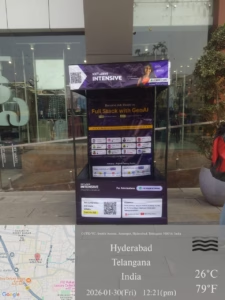
The physical structure of the demo tent plays a major role in perception. Clean design, strong branding, proper lighting, and professional finishing immediately signal credibility. Consumers subconsciously judge product quality based on how seriously a brand presents itself offline. Location selection is equally critical. Demo tents work best where people have time to stop and engage rather than rush through. Promoters are not just staff members but brand representatives who must understand the product deeply and communicate confidently in the local language. A successful demo tent campaign also follows a defined demonstration script so that every consumer receives a consistent brand message. Data collection during the activity ensures that insights and leads are not lost after the tent is dismantled.
Benefits for Businesses Using Demo Tent Advertising
One of the biggest advantages of demo tent advertising is speed of trust creation. Instead of spending months building familiarity through repeated ads, brands can establish credibility within minutes of interaction. This format allows immediate feedback from real consumers which helps brands refine messaging and sometimes even product features. Demo tents also generate measurable outcomes such as direct sales, qualified leads, distributor inquiries, and follow up opportunities. For regional and local brands, demo tent advertising creates physical dominance that digital platforms alone cannot deliver. It makes the brand visible, approachable, and human.
Industries and Use Cases Where Demo Tent Advertising Delivers Maximum Impact
Demo tent advertising is especially powerful for products and services that require explanation or experience. FMCG brands benefit because sampling drives trial and trial drives repeat purchase. Electronics and appliance brands benefit because features need live demonstration to be believed. Education institutions use demo tents effectively during admission seasons because parents and students require personal interaction and counseling. Healthcare and wellness brands rely on demo tents to build confidence in safety and effectiveness. Real estate and financial services use this format to simplify complex offerings through face to face explanation. New product launches across industries benefit from demo tents because they reduce launch risk by testing real consumer response.
Where and When Demo Tent Advertising Is Most Effective
The effectiveness of demo tent advertising depends heavily on timing and placement. High footfall locations such as malls, residential communities, colleges, corporate parks, exhibitions, and public events provide the right environment for engagement. Evenings and weekends generally perform better because people are relaxed and open to interaction. Festive seasons and buying cycles amplify results because consumer intent is already active. Poor timing or wrong location can destroy campaign performance regardless of how good the product is.
Customization and Creative Execution in Demo Tent Advertising
A demo tent should never look generic. Customization allows the brand to stand out visually and emotionally. Size, color themes, display layout, lighting, digital screens, product counters, and interactive elements must align with brand identity and target audience psychology. Creativity in demo tent advertising is not about decoration. It is about maximizing attention retention and message clarity. A creatively executed tent increases dwell time which directly increases conversion probability.
Why Choosing the Right Agency Matters
Most agencies focus on execution without strategy. They provide tents and promoters but ignore conversion mechanics. A serious demo tent campaign requires planning around location intelligence, consumer behavior, promoter training, demo scripting, and post activity reporting. Agencies that understand these layers deliver results. Agencies that do not simply deliver photos. Choosing the right partner determines whether demo tent advertising becomes a revenue driver or a wasted expense.
Getting Started
Demo tent advertising is one of the few marketing formats where brands control the entire consumer experience from first glance to final decision. In a market where trust is declining and attention is fragmented, physical interaction restores credibility. Brands that avoid ground level engagement lose relevance over time. Brands that invest in demo tent advertising build belief, loyalty, and long term market presence. Offline marketing is not outdated. Poor execution is.