
Bus Shelters – High-Impact Outdoor Advertising at Street-Level Touchpoints
Bus Shelters are one of the most consistent and high-frequency outdoor advertising assets available in urban and semi-urban markets. Positioned at roadside passenger waiting points, bus shelters provide brands with repeated, eye-level visibility among daily commuters, pedestrians, motorists, and local residents. In Andhra Pradesh and Telangana, where public bus transport remains a primary mobility channel, bus shelters operate as fixed advertising hubs within high-traffic corridors.
Unlike highway hoardings that rely on speed-based impressions, bus shelter advertising benefits from dwell time. Passengers waiting for buses remain stationary for several minutes, allowing deeper message absorption. At the same time, passing vehicles and foot traffic add secondary exposure layers.
What Is Bus Shelter Advertising?
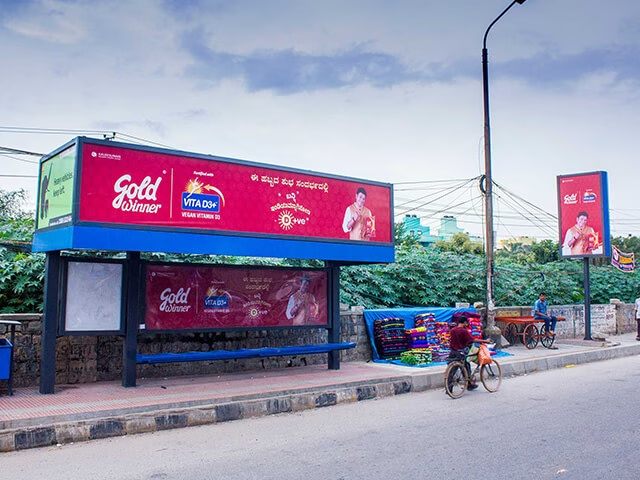
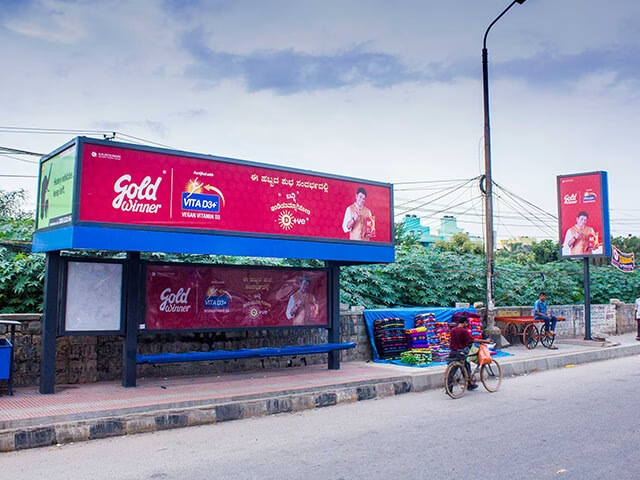
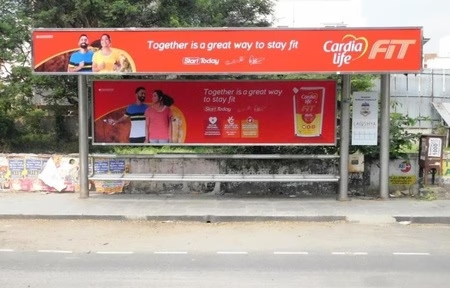
Bus Shelter advertising refers to the placement of branded panels, backlit displays, or full shelter branding on public bus stop structures. These may include:
Back panels inside shelters
Side panels
Roof fascia branding
Full shelter wraps
Seat-back branding
Pillar panels
Digital LED integrations
Bus shelters provide fixed, street-level media exposure at high pedestrian concentration points.
Why Bus Shelters Are Powerful Outdoor Advertising Assets
High Dwell-Time Exposure
Passengers wait for buses, often 5–20 minutes, increasing visibility.
Eye-Level Positioning
Advertisements are directly within the line of sight of seated and standing commuters.
Continuous Daily Traffic
Shelters are located on busy roads with constant vehicle flow.
Localized Market Penetration
Brands can dominate specific neighborhoods or city zones.
Day & Night Visibility
Backlit panels enhance impact after sunset.
Bus shelters combine static strength with frequency repetition.
Business Benefits of Bus Shelter Advertising
High daily impression volume
Repeated exposure among regular commuters
Cost-effective compared to large hoardings
Suitable for hyperlocal targeting
Strong recall through consistent presence
Reinforcement support for Newspaper and Metro Advertising
Bus shelters provide long-term visibility without movement dependency.
Ideal Industries for Bus Shelter Campaigns
Bus Shelter advertising performs effectively for:
Educational institutions promoting admissions
Real estate projects targeting local investors
Hospitals and diagnostic centers
Retail chains and supermarkets
Financial services and microfinance institutions
Government awareness campaigns
Political campaign promotions
FMCG brands targeting mass markets
Brands targeting both commuters and road traffic gain dual exposure benefits.
Strategic Placement Considerations
High-Traffic Arterial Roads
Shelters along major city roads generate maximum vehicle impressions.
Near Educational & Commercial Zones
Placement near colleges, IT parks, and markets increases relevance.
Residential Clusters
Strong impact for hyperlocal campaigns.
Multiple Shelter Clustering
Dominating consecutive shelters increases brand recall dramatically.
Location strategy determines campaign effectiveness.
Creative Strategy for Bus Shelters
Large Visual Dominance
Bold imagery captures attention from distance.
Minimal Text
Transit audiences process short messages better.
Strong Brand Logo Visibility
Immediate recognition strengthens recall.
Clear Call-To-Action
Phone number, website, or QR code must be legible.
Outdoor clarity is more important than design complexity.
Execution Considerations
Municipal & Transport Permissions
Bus shelter advertising requires approval from local authorities.
Weather-Resistant Materials
Print must withstand sun, rain, and dust.
Illumination Management
Backlit panels increase visibility in evening hours.
Campaign Duration
Minimum 30–60 days recommended for repetition-based recall.
Consistency is key in shelter advertising.
Bus Shelters vs Highway Hoardings
Bus shelters offer close-range dwell-time exposure; hoardings rely on high-speed visibility.
Shelters target pedestrians and commuters; hoardings target motorists.
Shelter campaigns are hyperlocal; hoardings are city-wide.
Both formats complement each other within an outdoor strategy.
Why Choose Raagnaai Ads for Bus Shelter Advertising in AP & Telangana
Executing Bus Shelter campaigns requires route analysis, shelter inventory planning, permission coordination, creative optimization, and installation monitoring. Raagnaai Ads provides:
Location profiling and traffic analysis
Strategic shelter clustering plans
Creative design and printing
Approval coordination
Installation supervision
Integration with Metro, Railway, and Mall Advertising campaigns
The objective is structured, sustained street-level visibility.
FAQs – Bus Shelters
Are Bus Shelters suitable for small businesses?
Yes. They provide strong hyperlocal dominance at reasonable budgets.
How long should Bus Shelter campaigns run?
Minimum 30 days recommended for effective recall.
Are backlit shelters more effective?
Yes, especially for evening and night visibility.
Do Bus Shelters generate direct leads?
They primarily build awareness and recall, supporting lead generation when paired with strong call-to-action.
Getting Started with Bus Shelters
Bus Shelters are a high-frequency outdoor advertising solution designed to convert commuter waiting time and roadside traffic into sustained brand exposure. By leveraging eye-level visibility and daily repetition, bus shelter campaigns build strong recall across urban and semi-urban markets in Andhra Pradesh and Telangana. For brands seeking street-level dominance with controlled local targeting, bus shelters remain one of the most effective traditional advertising assets.
 Call Now: 90002 81722
 Email: sales@raagnaaiads.com
 Visit: www.raagnaaiads.com
Follow Us for Marketing Insights & Updates
 Facebook: facebook.com/raagnaaiads Instagram: instagram.com/raagnaaiads LinkedIn: linkedin.com/company/raagnaaiads
 YouTube: https://www.youtube.com/@raagnaaiads
 Your Brand Deserves Continuous Visibility. Let’s Make It Happen!