Most brands underestimate a simple reality. A large portion of consumer decision making still happens in physical environments. People buy from brands they repeatedly see in their daily routes. Roads, village centers, market streets, highways, bus routes, and residential neighborhoods create constant exposure opportunities.
Digital advertising creates temporary impressions. Outdoor presence creates memory. If a brand wants to dominate a location, it must become visually unavoidable in that geography.
This is where Wall Painting Advertising becomes powerful. Unlike temporary banners or short campaign media, wall paintings create long term brand presence in high visibility locations. Once executed properly, they work as a continuous advertising asset that remains visible for years.
For businesses targeting Andhra Pradesh and Telangana markets, wall painting advertising provides unmatched coverage from rural villages to dense city traffic zones.
What is Wall Painting Advertising
Wall Painting Advertising is a traditional outdoor marketing method where brand advertisements are directly painted on large walls located in high visibility public areas. These walls may be roadside buildings, compound walls, highway facing surfaces, village entry points, commercial streets, or transportation routes.
Instead of placing removable media such as banners or posters, the advertisement is hand painted or digitally transferred directly onto the wall surface.
This format creates a permanent advertising structure that becomes part of the physical environment of that location.
Modern wall painting campaigns usually operate in three formats.
Low rise wall painting placed at street level in towns, villages, markets, and residential areas where pedestrians and local commuters see the brand repeatedly.
High rise wall painting placed on tall building sides or highway facing structures designed for long distance visibility.
Digital wall painting where designs are created digitally and transferred with high precision painting techniques to ensure visual accuracy and color consistency.
Through a structured network of walls across regions, brands can create location level dominance and ensure their brand message is repeatedly seen by the same audience every day.
Purpose and Marketing Role of Wall Painting Advertising

Wall painting advertising is not simply about visibility. Its real value lies in building territorial brand ownership.
When consumers repeatedly see the same brand message across multiple walls in their area, the brain automatically assigns authority to that brand within that geography. This psychological effect is known as environmental repetition based brand recall.
In traditional markets across India, this mechanism has been used by large consumer brands for decades. Cement brands, telecom companies, fertilizer brands, political campaigns, and FMCG companies have relied heavily on wall paintings to control rural and semi urban mindshare.
The marketing role of wall painting advertising includes brand recall reinforcement in daily commuting routes, geographic brand domination within specific territories, long term advertising presence without repeated media cost, rural and semi urban brand penetration, and reinforcement of dealer or distributor networks.
For brands that rely on local demand generation, this medium becomes extremely strategic.
Key Features of Wall Painting Advertising
One of the strongest characteristics of wall painting advertising is its long term durability. Unlike flex banners that degrade within months, properly executed wall paintings remain visible for years with minimal maintenance.
Another major feature is location flexibility. Walls exist everywhere including remote villages, small towns, highways, local markets, bus routes, and urban residential clusters. This allows brands to reach audiences that digital advertising cannot penetrate effectively.
Wall painting also supports large format creative execution. Since the surface area of walls is usually large, the design can include bold typography, large brand logos, and simple messages that are readable from long distances.
This format also supports frequency based branding. When multiple walls are painted within the same locality, the brand message appears repeatedly across streets and junctions. This repetition significantly increases recall and trust.
Additionally, wall painting advertising operates continuously. Once the wall is painted, the advertisement remains visible twenty four hours a day without any additional media spending.
Benefits for Businesses
One of the biggest advantages of wall painting advertising is long term cost efficiency. A single wall can generate brand impressions for several years. When calculated on a cost per impression basis, it becomes one of the most economical advertising formats available.
Another benefit is deep rural penetration. Many villages and small towns have limited digital exposure and fewer billboard structures. Wall painting becomes the most practical medium to reach those audiences.
The format also builds strong brand credibility. When people see a brand physically present in their area for long periods, it creates subconscious trust. The brand appears established and reliable.
Wall painting is also highly effective for local distribution driven businesses. Dealers, retailers, and distributors benefit when the brand becomes visible across the territory they operate in.
Additionally, this medium allows precise geographic targeting. Brands can choose specific towns, districts, or highways where their target customers are concentrated.
Industries and Use Cases Where Wall Painting Advertising Works Best
Wall painting advertising works particularly well for industries that rely on geographic reach and repeated consumer exposure.
Consumer goods brands use wall painting extensively to build familiarity in rural and semi urban markets. Products such as packaged foods, beverages, detergents, and household products benefit from continuous visibility.
Construction material brands including cement, steel, paints, and pipes use wall painting to influence contractors, builders, and local hardware buyers.
Telecommunication companies use wall painting to promote network availability and recharge services in remote areas.
Political campaigns also depend heavily on wall painting because of its strong visibility and territorial coverage.
Educational institutions, hospitals, retail chains, and local service businesses can also use this medium to create strong regional awareness.
Where and When Wall Painting Advertising is Most Effective
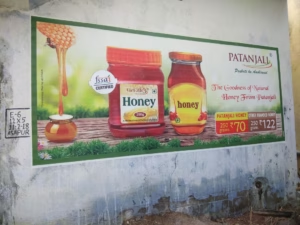
The effectiveness of wall painting depends heavily on location selection.
High traffic village roads, market entrances, bus routes, school surroundings, and highway entry points generate consistent visibility.
Urban residential clusters also offer strong exposure because residents pass the same routes daily. When multiple walls are placed within the same locality, the brand becomes part of the daily visual environment.
Wall painting campaigns work best when they are designed as territorial coverage programs rather than isolated placements. A network of walls across a region produces significantly stronger recall than a few scattered walls.
Timing also plays a role. Businesses launching new distribution networks, entering new territories, or preparing for seasonal demand spikes benefit greatly from early wall painting deployments.
Customization and Creative Options
Wall painting advertising allows brands to customize design based on geography, language, and audience behavior.
Regional language messaging improves relatability in local markets. For example, Telugu messaging works far better than generic English advertising in most rural regions of Andhra Pradesh and Telangana.
Creative execution can include bold brand colors, large typography, product illustrations, directional information, dealer contact details, or promotional offers.
Some campaigns also combine hand painted artwork with stencil based designs to maintain consistency across multiple locations.
Digital wall painting techniques further improve visual quality and help maintain brand design standards across large campaigns.
Why Choose Raagnaai Ads
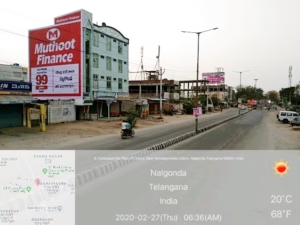
Executing a successful wall painting campaign requires strong operational infrastructure. Identifying high visibility walls, securing permissions, preparing surfaces, executing painting work, and maintaining design quality all require specialized experience.
Raagnaai Ads operates across Andhra Pradesh and Telangana with extensive networks for outdoor advertising execution. Based on client requirements, campaigns can be deployed using low rise wall painting, high rise wall painting, and digital wall painting formats.
The agency focuses on strategic wall selection to ensure maximum visibility and long term brand impact.
Brands working with Raagnaai Ads gain access to region specific location planning, scalable execution across multiple districts, and customized design implementation based on campaign objectives.
Getting Started
Wall painting advertising remains one of the most powerful traditional marketing tools for building long term geographic brand presence.
While digital media dominates online attention, physical visibility in daily environments still plays a major role in shaping consumer decisions. A brand that appears repeatedly across roads, markets, and neighborhoods becomes familiar and trusted.
For businesses targeting regional markets, especially across Andhra Pradesh and Telangana, wall painting advertising offers unmatched reach, longevity, and cost efficiency.
When executed strategically across multiple locations, it transforms ordinary walls into continuous brand communication assets.