Most brands today are trapped in a predictable loop. They spend heavily on digital ads, expect engagement, and end up competing in an overcrowded attention market. The real issue is not just visibility, it is memorability and physical presence. When customers do not see, hear, or interact with your brand in their real environment, your recall drops sharply no matter how much you spend online.
This is where Canter Van Activity Advertising becomes strategically important. It brings your brand directly into the streets, into the daily lives of your target audience, and creates live interaction instead of passive exposure. This is not just advertising. It is controlled, mobile, high frequency brand experience.
What is Canter Van Activity Advertising
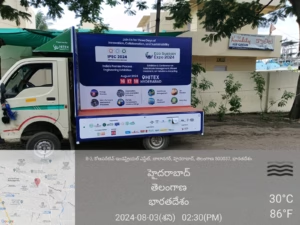
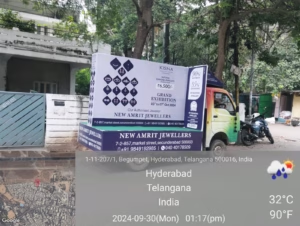
Canter Van Activity Advertising is a mobile outdoor marketing method where a fully branded vehicle moves across targeted locations while engaging directly with the public. Unlike static formats, this approach combines movement, audio, visuals, and human interaction.
A typical setup includes a customized van fitted with LED screens, audio systems for jingles or announcements, and a small on ground activation setup. The van moves through high density areas such as markets, residential zones, commercial streets, and event hotspots, stopping strategically to engage people.
This model is designed not just for visibility but for active engagement. The audience does not just see your brand, they experience it.
Purpose and Marketing Role
The core role of Canter Van Activity Advertising is to bridge the gap between brand awareness and consumer interaction. Most advertising fails because it stops at visibility. This format goes further by creating recall through repetition, sound, and physical presence.
From a marketing strategy perspective, this method serves three critical functions. First, it increases local market penetration by covering areas where digital reach is weak or inconsistent. Second, it builds trust because people tend to respond more to physical and visible brands than digital impressions. Third, it creates frequency. When a van moves repeatedly through the same areas, your brand becomes familiar, and familiarity directly influences buying decisions.
Key Features Explained with Real Execution Logic
One of the strongest features of this format is mobility. Unlike billboards that stay fixed in one location, a Canter Van can be routed based on business goals. If a store wants to increase footfall in a specific locality, the van can operate within a defined radius, repeatedly covering the same streets.
Another feature is audio integration. Audio jingles are not just background noise. When executed correctly with repetition and clarity, they act as memory triggers. In crowded Indian markets, sound cuts through visual clutter faster than static displays.
LED screen integration allows dynamic content display. This means brands can show product visuals, offers, or short promotional videos. Unlike static banners, LED content can be updated based on time, audience, or campaign phase.
The most underrated feature is human interaction. Ground promoters can distribute flyers, explain offers, or guide customers to nearby stores. This converts passive viewers into potential customers on the spot.
Benefits for Businesses
The biggest benefit is direct market penetration. Instead of waiting for customers to discover your brand, you take the brand to them. This reverses the typical marketing dynamic and gives you control over exposure.
Another major advantage is cost efficiency in local targeting. Large billboards demand high investment but do not guarantee engagement. A Canter Van campaign can be executed with controlled budgets while ensuring repeated exposure in high value areas.
Brand recall improves significantly because the campaign uses multiple sensory triggers. People see the visuals, hear the audio, and sometimes interact physically. This multi layer exposure is far more effective than single channel advertising.
It also provides flexibility. Campaigns can be adjusted quickly based on response. Routes can change, messaging can be updated, and targeting can be refined without major additional cost.
Industries and Use Cases Where It Works Best
This format works exceptionally well for retail businesses, especially those dependent on local footfall such as supermarkets, clothing stores, electronics shops, and dental or healthcare clinics. These businesses benefit from hyperlocal visibility and immediate action.
Real estate projects also gain strong traction because location based promotion is critical. Moving vans can cover nearby residential areas and create awareness among relevant buyers.
Education institutes, including schools, colleges, and coaching centers, use this method effectively during admission seasons. The ability to reach residential clusters directly gives them an advantage.
FMCG brands use it for product launches and sampling activities. The combination of movement and interaction helps them generate quick trials and initial awareness.
Where and When It is Most Effective
Effectiveness depends heavily on route planning and timing. High density areas such as marketplaces, residential colonies, and commercial streets deliver the best results. However, the key is repetition. One time exposure rarely works. The same areas must be covered multiple times to build familiarity.
Timing should align with audience movement patterns. Morning hours work well for residential targeting, while evenings are more effective for marketplaces and commercial zones. Weekends usually generate higher engagement because foot traffic increases.
Campaign duration also matters. Short bursts create awareness, but sustained campaigns create recall and action. Most effective campaigns run over multiple days or weeks with consistent routing.
Customization and Creative Options
The strength of this format lies in its adaptability. Vans can be fully customized with brand colors, messaging, and visuals. LED screens allow video based storytelling instead of static messaging.
Audio can be tailored with regional language jingles, which significantly improves connection with local audiences. Messaging can also be changed based on location. For example, different offers can be promoted in different areas.
Interactive elements such as games, small contests, or live demonstrations can be added to increase engagement. This turns the campaign from a promotional activity into an experience.
Why Choose Our Agency
Execution is where most campaigns fail. Poor routing, weak audio, untrained promoters, and inconsistent branding reduce effectiveness drastically. Our approach is built on controlled execution and measurable outcomes.
We plan routes based on actual footfall patterns, not assumptions. We design audio and visual content that is clear, repetitive, and memorable. Our teams are trained to interact with the public in a way that converts attention into interest.
We also focus on consistency. Branding, messaging, and experience remain uniform across all touchpoints. This ensures that every interaction strengthens the same brand image instead of creating confusion.
Getting Started
Canter Van Activity Advertising is not a replacement for other marketing methods. It is a force multiplier for brands that want real world presence and measurable local impact. In markets where competition is high and attention is fragmented, physical visibility combined with interaction creates a clear advantage.
Brands that rely only on passive visibility struggle with recall. Brands that engage directly build familiarity and trust. This format delivers both.